

Motion sensor faucets operate by using infrared or advanced sensing technology to detect the presence of hands and activate water automatically. Instead of touching a handle, users place their hands beneath the spout, and the faucet instantly responds. This touch-free design improves hygiene, saves water, and creates a modern, convenient washing experience. To demonstrate stable sensing performance in real-world use, we will reference COIGN sensor basin faucets, which combine precise detection with durable construction: COIGN Sensor Basin Faucet.
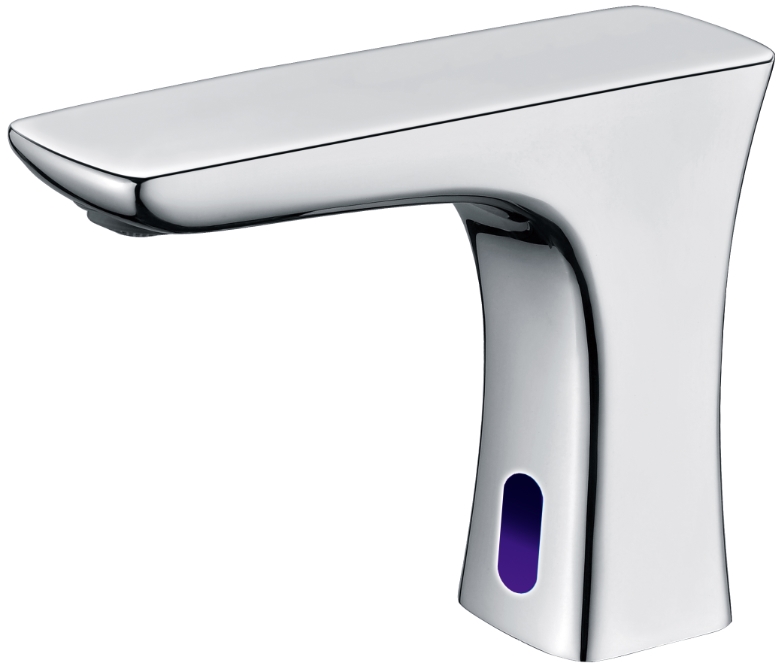
How Motion Sensor Faucets Work
Motion sensor faucets rely on a combination of sensor technology, a control unit, and a solenoid valve to operate automatically. When hands enter the sensor’s detection area, the faucet activates instantly; when hands leave, the water flow stops. This section explains the technology behind the faucet’s touch-free operation and how each internal part functions together.
The Sensor’s Detection Process
At the core of a motion sensor faucet is an infrared sensor that emits a light beam. When hands move into the sensing zone, the beam reflects back into the receiver, triggering the faucet’s internal response.
The detection is calibrated carefully so that small movements activate the faucet smoothly without unnecessary false triggers. COIGN faucets use finely tuned detection ranges to ensure accuracy in various environments, from bright commercial restrooms to soft-lit residential bathrooms.
The Control Unit’s Signal Processing
Once the sensor detects a hand movement, the control unit interprets the signal and determines whether to open or close the water flow.
This control module works like the “brain” of the faucet, processing infrared reflections in real time. Modern control systems also regulate duration settings, response sensitivity, and automatic shut-off timing. In high-quality models such as those offered by COIGN, the control circuit is optimized to minimize power consumption and deliver consistent response speed.
The Solenoid Valve’s Water Control Function
After the control unit sends the activation signal, the solenoid valve takes over. This valve is responsible for physically opening and closing the water path.
Inside the valve, an electromagnetic coil reacts to the signal, pulling or releasing a plunger that controls water flow. The movement happens instantly, providing smooth and quiet activation. COIGN uses durable brass solenoid structures and sealed internal components to ensure long-term reliability even in high-use environments.
Power Source: Batteries or AC Adapters
Motion sensor faucets typically use either batteries or an AC power supply.
Battery-powered faucets are common in homes and small facilities because they do not require electrical wiring. AC-powered or hybrid models are more common in commercial restrooms with heavy traffic. A comparison table helps clarify their differences:
| Power Type | Features | Best Use Scenario |
|---|---|---|
| Battery | Easy installation, safe, long lifespan | Homes, small washrooms |
| AC Adapter | Continuous power, ideal for constant use | Hotels, airports, malls |
| Hybrid | Uses both systems for backup | Facilities needing uninterrupted operation |
COIGN’s sensor faucets are available in energy-efficient configurations suitable for various installation needs.
Applications of Motion Sensor Faucets
Motion sensor faucets are extremely versatile due to their hygiene benefits, water-saving performance, and easy operation. Their use extends beyond commercial facilities and is now common in modern residential bathrooms.
Home Bathrooms
Families enjoy a cleaner sink area and reduced water waste. Touchless operation is especially helpful for children, seniors, and those with limited mobility.
Commercial Properties
Shopping malls, office buildings, and public restrooms rely on sensor faucets to reduce water consumption and lower maintenance costs.
Healthcare Facilities
Clinics and hospitals implement touch-free systems to prevent cross-contamination and maintain strict sanitation requirements.
Hospitality Spaces
Hotels and resorts use motion sensor faucets to enhance guest experience while strengthening hygiene control.
Educational Buildings
Schools and universities benefit from hands-free fixtures that promote cleanliness among students and reduce faucet-related wear.
COIGN’s sensor faucet range is engineered to function reliably in any of these environments due to stable detection technology and durable valve performance.
Common Questions About How Motion Sensor Faucets Work
Users often have practical questions about controlling, maintaining, and troubleshooting sensor faucets. The answers below provide clear guidance.
1. Do motion sensor faucets run continuously once activated?
No. They activate only when hands are detected. If the hands stay within the sensing zone, the faucet continues to run. When hands move away, it shuts off automatically.
2. How accurate is the sensor’s detection range?
Most sensors are calibrated to detect movement within a specific distance, usually 5–20 cm. High-quality models like COIGN’s maintain stable accuracy even in varying lighting conditions.
3. Do lights or reflections interfere with the sensor?
Infrared sensors are designed to filter out environmental reflections. Unless exposed to strong direct sunlight at certain angles, interference is minimal.
4. Can the temperature be adjusted manually?
Yes. Sensor faucets typically include a mixing valve underneath the sink that allows you to set a preferred water temperature.
5. What happens if the sensor becomes dirty?
Sensor windows should be cleaned occasionally with a soft cloth. Dirt or soap residue can reduce accuracy, but cleaning usually restores full performance immediately.
Summary
Motion sensor faucets work by combining infrared detection, intelligent control circuitry, and a solenoid valve to deliver completely hands-free water activation. The process is smooth, efficient, and highly reliable when using a well-designed model. These faucets offer strong advantages in hygiene, water savings, convenience, and long-term durability, making them suitable for residential, commercial, and healthcare environments.
With precision-engineered sensors and stable valve structures, COIGN sensor basin faucets provide dependable touch-free operation and a modern user experience. As bathrooms continue to evolve toward more sanitary and efficient designs, motion sensor faucets represent a practical and forward-thinking upgrade for any space.